Note: This content was written entirely by me and was not generated, edited, or researched using AI.
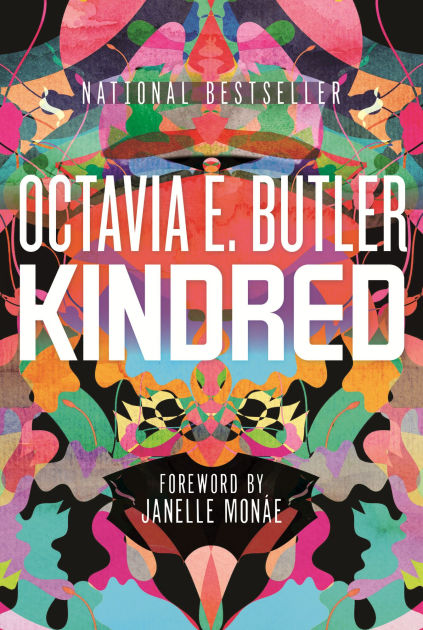
‘Kindred’ (1979) by Octavia E. Butler – BOOK REVIEW
Length
280 Pages
Genre
Science Fiction
Difficulty
–
Octavia Butler’s “Kindred” isn’t a novel that soft-serves slavery like a PBS miniseries; it refuses the comfort of historical distance. It’s not for the sensationalists or faint of heart, satisfied with the brief, illusory lesson of America’s past taught in high school classrooms. In “Kindred,” by Octavia Butler, Dana, the modern black woman and anchor of the time-traveling hiccup from 1976 to 1815, arrives in the Antebellum South, her first gaze falling upon a young, white boy drowning in a river. This is the commencement of events that intensify this speculative fiction narrative by bringing readers back to the dehumanization and cruelty threaded in Black American history.
Dana is a woman of her time, wed to Kevin, a white man and emerging writer in 1976, California, reveling in the new home he recently purchased for them. The Labor Bureau Connection, or the ‘slave-market’ referred to by Dana, was now a minor detail in her past, disappearing into the trivialities of her struggle as an aspiring writer herself.
It is an afternoon in June when Dana spontaneously manifests across centuries to 1815, first to save a little boy drowning in the river, and then, years later, to save the same little boy from burning down his house. Due to these repeated happenstances, she familiarizes herself with Rufus Weylin, who grows and beckons her through time like a serendipitous angel, always saving the day when his life is in jeopardy. Although years pass between each occurrence with Rufus in the 1800s, it is only seconds, hours, or days in 1976. Dana’s cyclical appearance in the 1800s establishes a pivotal connection between her and Rufus, underscoring the complexity of their evolving relationship.
There was much to realize over the course of Dana’s summonings to the 1800s. Dana figured she teleported away from home, but was unaware she time-traveled to a perilous period in history, which she learned after Rufus casually spewed derogatory epithets and drawls in an antiquated, abhorrent southern accent, indicating the deep-rooted racism ingrained in the era. More frightening was the fact that Dana could not control her own time-travel, and did not know how long she’d be in the Antebellum South — could be days, months, years — and with this, she thought of survival and survival alone.
Under the watchful eye of Tom Weylin, his wife Margaret Weylin, and their son Rufus, Dana becomes blind to her gradual capitulation into slavery, which she denounces the moment she knows her new home back in California, 1976, would be a figment of her imagination until further notice; she vowed she’d be that same person — that same aspiring writer married to Kevin in Altadena, California. Little does she know that, between each occurrence, pieces of the Dana she knows fall away.
Upon becoming acquainted with the slaves of the Weylin plantation, her lived experience juxtaposes the nightmare she has only acknowledged through scholastic and cinematic mediums. Dana pities the submission and dysfunction of the slaves surrounding her, as the Weylins dehumanize and breed them to take ownership of their own children, appraising them and then selling them. She almost overlooks the subtle sacrifices she’s made in the face of survival; the biting of her tongue as they regard her with subjugation, the cognitive dissonance after they raise their hand to her, threaten her, whip her. Dana’s psychological erosion unleashes her instinct and defiance as she adjusts under the weight of her conditions.
“I never realized how easily people could be trained to accept slavery.”
Despite the horrors of their disposition, Butler brilliantly explores the relations formed between slaves and their enslavers, bonds developed out of desperation, need, and survival in the midst of the Antebellum South, highlighting how far slaves would go to minimize the chances of being abused, torn apart by dogs, or shot — even in their perpetual despair.
Dana, however, is playing her own game of survival. Being the only slave who can read, write, and ‘talk white’, she pedestals her strengths to avoid the bleakest grievances of slavery. With Rufus imprisoned in their dependent relations (she shows up and keeps him from dying, he keeps her in good spirits so as not to let him die), Dana’s downfall is thinking she is immune to the horrors of her position. In this game, there is such a thing as the envelope being pushed too far. Although Dana and Rufus seem to cultivate a dizzying, somewhat understood sentiment of reciprocity, their skin always clarifies the hierarchy when things get tense. This is Maryland in the Antebellum South. Rufus is white; Rufus is her master — and Dana, don’t you forget it. The moral paradox progresses. Butler’s genius exposes the interwoven paternalistic dynamic between the oppressor and the oppressed.
“Strangely, they seemed to like him [Rufus Weylin], hold him in contempt, and fear him all at the same time. This confused me because I felt just about the same mixture of emotions for him myself. I had thought my feelings were complicated because he and I had such a strange relationship. But then, slavery of any kind fostered strange relationships. Only the overseer drew simple, unconflicting emotions of hatred and fear when he appeared briefly. But then, it was part of the overseer’s job to be hated and feared while the master kept his hands clean.”
Not all slaves at the Weylin plantation are unified in yielding. Butler’s novel studies the slave paralyzed by trauma, unwilling to leave the dominion of their enslavers, and in contrast, the slave who is adamant about escaping their trauma, honing their ability to weave lies and find courage within, with hopes of a better life in the North.
“She lowered her voice to a whisper.
‘You need to look at some of the niggers they catch and bring back,’ she said. “You need to see them—starving, ’bout naked, whipped, dragged, bit by dogs … You need to see them.”
‘I’d rather see the others.’
‘What others?’
‘The ones who make it. The ones living in freedom now.’
‘If any do.’
‘They do.’
‘Some say they do. It’s like dying, though, and going to heaven. Nobody ever comes back to tell you about it.’”
There is something incredibly personal and stupefying about walking in lockstep with Dana as she steps into the raw reality of black American slavery. What happens when you remove the privilege of spectatorship? Walls collapse as an observer. We proceed with Dana as our vessel as she fights for her life in a time when it was nothing more than a price. Today, we are tempered by the historical distance we put between us and black American history as if some of our relatives are still not alive to tell the horrors of this past, as if the consequences aren’t still surfacing. So recently has slavery been outlawed — at least, chattel slavery as we know it. This raises the question of whether Dana’s survival is enough, as the Weylin plantation snatched the remnants of her being. It raises the question, will Dana ever be whole again?
In modern times, we must never fall blindly into the pits of sheepish conformity. Through her harrowing narrative, Butler reminds us that our lives are always a reason to keep fighting and that this path in history is still unfinished.
★★★★★
SYNOPSIS
Dana’s 26th birthday celebration ends when she’s ripped from 1976 California and thrust onto a Maryland slave plantation in 1815. Her mission: keep alive the white boy who will grow up to assault her ancestor—because without him, she’ll never be born.
Every trip back grows more dangerous. Dana feels the lash, wears the chains, endures the daily terror that defined millions of lives. She can’t just read about slavery’s horrors—she lives them, bleeds from them, nearly breaks under them.
Butler doesn’t let you observe from a safe distance. You’re trapped in Dana’s skin as she navigates impossible choices: submit to survive, or resist and risk everything. You’ll feel her desperation as she fights to preserve her humanity while the plantation’s brutality threatens to consume her.
This isn’t historical fiction—it’s time travel that cuts straight to the bone of American racism. Butler pioneered the neo-slavery narrative that inspired Colson Whitehead’s Underground Railroad and Ta-Nehisi Coates’s Water Dancer. But Kindred remains unmatched in its raw power to make slavery’s legacy feel immediate, personal, and inescapable. [Read More & Buy Now]


 NIKKI BYRD — writer, thinker, lover
Leave a reply to Nikki Byrd Cancel reply